CFCR Technologies · 10 October 2026 · Engineering perspective
Treat the building as a changing environment
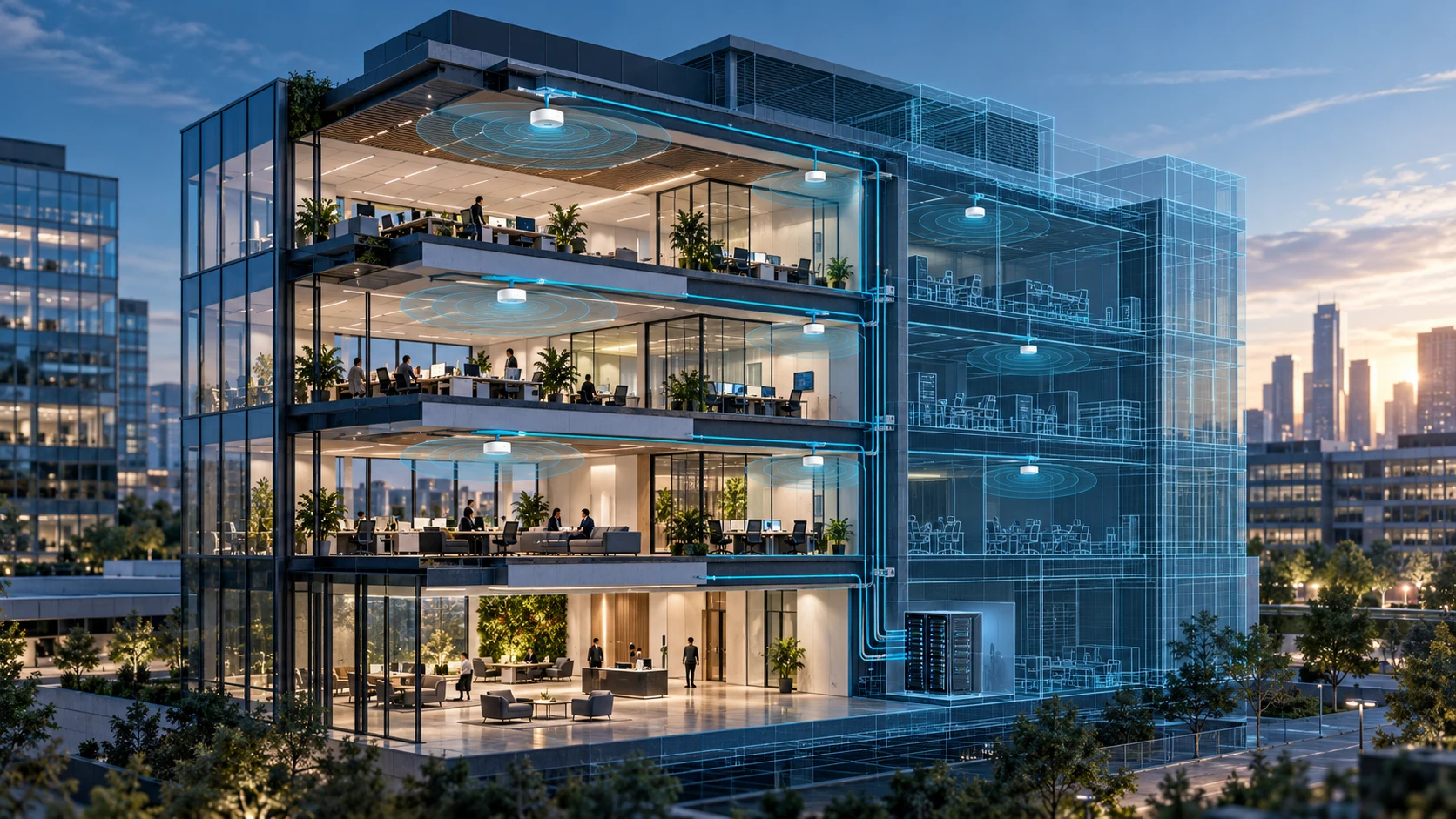
A distributed antenna system is designed around a particular environment. Renovation, new partitions, tenant changes and changing footfall can alter its demands. A future-focused approach links building information, antenna locations, cable and fibre paths, and measurement history into a model that engineering teams can keep current.
Make the model useful
Begin with accurate drawings, material assumptions, equipment records and agreed RF objectives. Use predictive modelling to compare candidate antenna layouts and architectures. A model becomes useful when the field team can locate assets and compare predictions with walk-test findings, rather than treating the original design as a permanent answer.
Where AI could contribute
An exploratory analytics layer could flag areas where measured behaviour diverges from expectations, cluster recurring alarms or prioritise locations for retesting. Those are proposed uses to evaluate, not a substitute for RF engineering. Model quality depends on the measurements, equipment interfaces and building data available.
Design for coverage and operation
Compare passive, hybrid and active DAS against RF loss, fibre availability, operator needs and maintainability. Coordinate cellular and Wi-Fi planning while preserving their individual technology requirements. Multi-operator arrangements and any network changes need the relevant approvals and validated compatibility.
Start with a living baseline
A practical first step is an RF assessment, verified inventory and updated as-built drawings for one building. Agree what evidence will trigger a design review and how operational data will be retained. CFCR can support DAS planning, design, integration, validation and monitoring discussions for your facility.